


 Have thoughts or questions?
Join the discussion in the forum →
In the past several months, we’ve tested and determined the best digital pianos across various price categories, and now it’s time to take a deeper look at the crème de la crème – the best portable digital pianos for advanced players.
Just to clarify, we’re sticking to portable digital pianos here – not stage pianos, workstations, synthesizers, or MIDI controllers, which we’ll explore in separate articles.
Pro-Grade Digital Pianos: Quick Overview

The high-end digital piano market isn’t nearly as crowded as the lower-end segment. In fact, it’s largely dominated by three major players – Yamaha, Roland, and Kawai.
Creating a digital piano that meets the standards of advanced players requires serious expertise, which is where these brands excel, thanks to their deep roots in acoustic piano craftsmanship.
Fifteen years ago, the idea of a sub-$2,000 digital piano delivering such rich, detailed sound would’ve seemed far-fetched. Yet, today’s technology makes it a reality, and it’s exciting to witness.
That said, portable digital pianos do have their limitations. Fitting a full-size wooden action, like Kawai’s Grand Feel, into a compact, gig-friendly design is challenging. If you’re seeking the most realistic touch or advanced speaker systems, you might want to explore console digital pianos instead.
This means that with high-end portable digital pianos, you can get excellent sound and touch quality without spending a fortune. Sounds appealing? Let’s dive in!
Here are our top picks for the best digital pianos for advanced players under $2,000:
- Kawai ES920 – Kawai’s Most Advanced Portable Digital Piano
- Roland FP-90X – Expressive Sound and Award-Winning Design
- Yamaha P-525 – The Flagship of the P-series with a Wooden Key Action
- Casio PX-S6000– A Powerhouse for Those Who Need More Than Just a Piano
Best Portable Digital Pianos for Advanced Players

- Model
- KeysModern acoustic pianos have 88 keys. Most digital pianos and keyboards have 88, 76, 73, or 61 keys.
In reality, 73 keys are enough to play most modern pieces. Some advanced pieces require a full set of 88 keys. - Fully-Weighted KeysThere are 3 most common types of key actions:
1) Non-weighted - most organs, synths and entry-level keyboards are not weighted.
2) Semi-weighted - often used portable keyboards and workstations. Spring-loaded mechanism adds more resistance to the keys compared to the non-weighted action.
3) Fully weighted (hammer action) is designed to replicate the action of a real piano. It uses small hammers (rather than springs) attached to each key to recreate the mechanical movements and resistance similar to the acoustic piano action. - Simulated Ivory/EbonySome digital pianos come with a simulated Ivory (white keys) and Ebony (black keys) key surfaces, which gives them a nice textured feel, helps absorb excessive moisture and prevents your fingers from slipping off the keys.
- Touch SensitivityThe volume produced by the instrument changes depending on how hard or soft you play the keys.
Touch Response, Velocity Sensitivity, Touch Sensitivity are the same thing .
Many digital pianos allow you to adjust touch sensitivity (make the keyboard more or less sensitive to the force of your keystrokes) to better suit your playing style. - Tone Generator
- PolyphonyThe number of notes a piano can play at once.
The more polyphony the better, especially when layering several sounds or using backing tracks, etc. When you reach the polyphony cap, the piano starts to drop the earliest played notes to free up memory for the new ones, which affects the sound and its fullness.
It’s desirable to have at least 64 notes of polyphony. - Built-in Tones
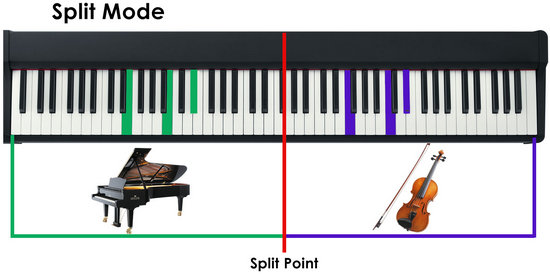
- Modes1) Split - divides the keyboard into two parts, allowing you to play a different instrument sound in each of them.
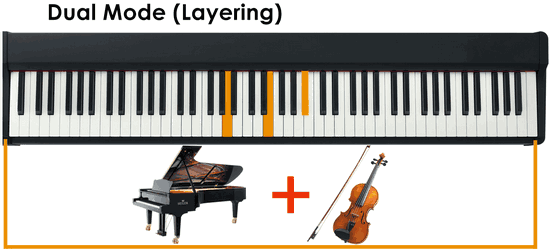
2) Dual (a.k.a. Layer Mode) - allows you to layer two different sounds so that they sound simultaneously whenever you press a key.
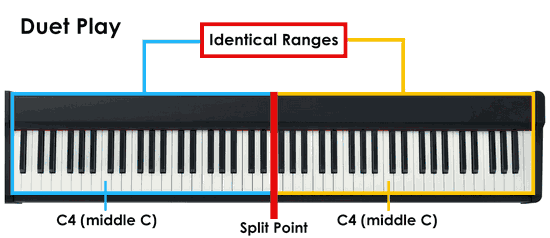
3) Duo (a.k.a. Duet Play, Partner Mode, Twin Piano) - divides the keyboard into two halves with identical pitch ranges (two middle Cs) allowing two people to play the same notes at the same time. - MIDI RecorderAllows you to record and playback your own performances.
A multi-track recorder (2 and more tracks) allows you to record several musical parts on separate tracks and play them back as a single song. - Audio RecorderAllows you to record the audio output of the instrument and save it to a flash drive usually in WAV format (Linear PCM, 16bit, 44.1 kHz, Stereo).
You can then share your recording on social media, upload it to SoundCloud, burn to CD, etc. - Transpose,Tuning1) Transpose function allows you to shift the overall pitch of the keyboard in semitone steps.
2) Tuning function (aka Fine Tuning, Master Tuning) allows you to shift the pitch from the standard A440 tuning in 0.1Hz or 0.2Hz steps. - Preset TemperamentsAbility to change the standard “Equal Temperament” tuning to other tuning systems (used in the 16th to 19th centuries), which are better suited for playing certain styles of music (Indian, Arabian, classical, etc.).
- Piano ElementsSimulated (often using physical modeling algorithms) characteristics of the piano sound, which are usually quite sublte but important if you want to get the fullest and the most realistic piano sound.
- MetronomeA useful tool for practice that will help develop your rhythmic and timekeeping skills by providing a steady beat to play along with.
Some pianos allow you change the conventional click sound of the metronome to various drum rhythms. - USB Type BThis port enables you to connect the keyboard to a computer/smart device and use it as a MIDI controller with VST plugins and music apps like GarageBand, Flowkey, Synthesia, FL Studio, etc.
- MIDI In/OutThis port enables you to connect the keyboard to a computer/smart device and use it as a MIDI controller with VST plugins and music apps like GarageBand, Flowkey, Synthesia, FL Studio, etc.
- Line Out JacksDedicated 1/4" line out jacks (R, L/Mono) allow you to connect the keyboard to an external amplifier, PA system, mixer and other audio equipment.
If you're planning on performing on stage or working in a studio, it's preferable to have these ports, even though a headphone out jack can also be used in most situations. - Bluetooth ConnectivityAllows you to connect your piano to a smart device wirelessly and exchange MIDI data with various music apps (e.g. GarageBand, Flowkey, Simply Piano, etc.). This can be used as an alternative to a USB type B port. Note that some pianos can only transfer Audio data via Bluetooth, others can only transfer MIDI.
Some pianos support both MIDI and Audio data via Bluetooth. - Speakers
- Depth
- Weight

- Kawai ES920
- 88
- Responsive Hammer III action (RHIII)
- (Ivory only)
- 9 types (+ 2 user types), Off
- Harmonic Imaging XL (HI-XL)
- 256 notes
- 38 (10 pianos)
- Dual, Split, Duo
- 2-track, 10 songs
- WAV, MP3
- 7 types (+ User)
- Damper / String / Key Off / Cabinet Resonance,
Damper / Fall-back / Hammer Noise,
Lid Position
(adjustable) - (+100 rhythms)
- (Audio + MIDI)
- 20W + 20W
- 14.7" (37.5 cm)
- 37.5 lbs (17 kg)

- Roland FP-90X
- 88
- PHA-50 Keyboard: Wood and Plastic Hybrid Structure, with Escapement
- 100 types, Off
- Pure Acoustic Piano Modeling
- 256 notes (limitless for piano tones)
- 362 (15 pianos)
- Dual, Split, Duo
- 1-track, 10 songs
- WAV, MP3
- 10 types
- Damper / String / Key Off / Cabinet Resonance,
Damper / Hammer / Key Off Noise,
Soundboard Type,
Lid Position
(adjustable) - (Audio + MIDI)
- 2 x 25W + 2 x 5W
- 15.3" (39 cm)
- 52 lbs (23.6 kg)

- Yamaha P-525
- 88
- GrandTouch-S with wooden white keys
- 5 types, Off
- Yamaha CFX (+ Binaural Sampling), Bösendorfer Imperial
- 256 notes
- 540 (11 pianos)
- Dual, Split, Duo
- 16-track, 250 songs
- WAV
- 7 types
- Damper / String / Duplex Scale / Body Resonance,
Lid Position
(adjustable) - (+40 rhythms)
- Type C
- (Audio + MIDI*)
- 2 x 20W + 2 x 6W
- 14.8" (37.6 cm)
- 48.5 lbs (22 kg)

- Casio PX-S6000
- 88
- Smart Hybrid Hammer Action
- 5 types, Off
- Multi-dimensional Morphing AiR Sound Source
- 256 notes
- 350 (15 pianos)
- Dual, Split, Duo
- 2-track, 5 songs
- WAV
- 17 Types
- Damper / String / Key Off Resonance,
Damper Noise, Key On/Off Action Noise
(adjustable) - (+20 rhythms)
- Audio + MIDI (via the included adapter)
- 2 x 8W + 2 x 8W
- 9.5" (24.2 cm)
- 32.6 lbs (14.8 kg)
All the digital pianos on this list offer the following features:
1) Kawai ES920 – A top-grade digital piano that deserves to be on the top of your list

The Kawai ES920 is a top contender for anyone seeking a realistic playing experience.
Highly praised by both intermediate and professional pianists, it stands out for its rich, authentic piano tone and natural-feeling key action.
While there are other strong competitors, the ES920 remains one of our favorite portable digital pianos on the market, and we think you’ll love it too.

Touch
The Kawai ES920 features the Responsive Hammer III (RHIII) keyboard action, which is the best plastic key action in Kawai’s lineup.
While it’s not a wooden key action, the RHIII still delivers a highly realistic feel. Although it doesn’t match the depth and mechanical precision of Kawai’s wooden “seesaw” actions like the Grand Feel III, it strikes a great balance between playability and portability.

The RHIII offers 88 progressively weighted keys with simulated ivory keytops, making it easier to control in humid conditions. Each key includes a metal counterweight for a more natural return, enhancing playability, especially in softer passages.
The action also features escapement (let-off) simulation, adding a subtle, authentic touch.
Overall, the RHIII is a pleasure to play, though the key bounce-back on the ES920 might be a bit too pronounced for some players.
Sound
When it comes to sound, it’s crucial to find tones that resonate with you. The Kawai ES920 shines in this area, particularly in its ability to replicate grand piano sound.
At its core is the Harmonic Imaging XL sound engine, offering 38 tones, including samples from three of Kawai’s finest grand pianos: the Shigeru Kawai SK-EX 9-ft. concert grand, the SK-5 chamber grand, and the Kawai EX concert grand.

Each of these tones has a distinct character, suitable for various genres and playing styles.
My personal favorite is the SK-EX tone — it’s incredibly expressive and flows so naturally that it almost feels like the instrument is alive under your fingers.
The ES920 also gives you full control over its sound through Kawai’s Virtual Technician feature, available both internally and via an app. You can adjust 21 parameters, such as damper resonance, string resonance, and hammer delay, allowing you to fine-tune the sound to your liking.
With 256 notes of polyphony, the ES920 ensures you’ll hear every detail of your performance.
Its two 20W front-facing speakers are strong enough to fill a medium-sized room and are suitable for small, intimate performances. While they might not be the best speakers out there, they’re impressive for a portable instrument like this.
Features
When it comes to features, the ES920 keeps things straightforward. You won’t find an extensive array of tones or deep sound design options here.
While stage performers might miss having more sliders or knobs for on-the-fly adjustments, the ES920 does include 4 EQ sliders — a nice upgrade over its predecessor, the ES8. Beyond that, it’s pretty basic in terms of sound shaping.

However, it covers all the essentials: a 2-track MIDI recorder, audio recorder, and a metronome with 100 preset rhythms to play along with.
The layer and split modes offer useful options like lower octave shift, layer octave shift, volume balance, and dynamic sensitivity, making it easier to blend sounds.
The ES920’s connectivity options ensure it’s versatile enough for various setups, whether on stage, in the studio, or at home.
You get two headphone jacks (1/4″ and 1/8″), line out jacks (R, L/Mono), USB to Host and Device, 1/8” stereo line in, 5-pin MIDI In/Out ports, and a damper jack. Plus, it has Bluetooth MIDI and Audio.

For those in need of a gigging piano, the Kawai MP7SE is another option. It shares much of the ES920’s core (sound engine, key action) but is geared more towards performing musicians.
It’s more compact, lacks built-in speakers, and offers more preset tones (256 vs. 38), additional connectivity options, and a well-designed control panel for easy tweaking during performances.
- Robust case, great build quality
- Realistic RHIII action with Let-off and Ivory feel keys
- Very natural and organic sounding piano tones
- Virtual Technician feature with 21 adjustable parameters
- 100 preset accompaniment rhythms
- Limited selection of preset sounds (38)
- Non-piano sounds feel a bit dated
2) Roland FP-90X – Expressive sound, intuitive controls, and arguably the best key action

The Roland FP-90X is a serious contender for the title of “best portable digital piano on the market.”
As the flagship model in Roland’s FP series, the FP-90X incorporates some of the best technology from Roland’s top-tier home digital pianos, including those in the HP and LX series.
Touch
The FP-90X comes equipped with the PHA-50 premium keyboard action, featuring a hybrid wood/plastic construction. This action has been highly praised by pianists and stands as Roland’s flagship key action, used across most of their high-end digital pianos.
Only the new Hybrid Grand Keyboard, exclusive to the LX-700 series, surpasses it in terms of advancement, with about 20% longer hidden keys to improve key pivot length.
With that said, the PHA-50 is impressive as it is. The action combines the benefits of wood and plastic, offering natural key travel, minimal side-to-side movement, and a quiet mechanism.
The keys have a simulated ivory and ebony texture, enhancing grip and feel, which is particularly appreciated in performance settings.
The PHA-50 also simulates escapement, though in a subtler way compared to Roland’s lower-end PHA-4 Standard action. The pivot length is excellent, likely the best among similar key actions, making it easier to play into the keys.

Overall, the PHA-50 strikes a balance between weight, responsiveness, and expression. It feels somewhat similar to Kawai’s RHIII but with slightly better key pivot length, and slightly deeper key travel allowing for a touch more nuance, especially when paired with the FP-90X’s advanced sound generation system.
Sound
When it comes to sound, the Roland FP-90X stands out from the crowd. Most digital pianos generate sound using samples — recordings of an acoustic piano triggered by your keystrokes. But Roland takes a different approach.
They use physical modeling, where they’ve mathematically modeled the behavior of an acoustic grand piano, complete with strings, dampers, hammers, and all its moving parts.

The FP-90X features Roland’s Pure Acoustic Piano Modeling, and in this model, they’ve integrated their most advanced sound engine from the top-tier LX series.
One big advantage of this modeling approach is the smooth, seamless transitions between velocity layers, offering a greater level of expressiveness and dynamic control.
Since there’s no need to store large amounts of sampled data, the FP-90X offers limitless polyphony for its modeled piano tones. Plus, it allows for deep customization.

With Piano Designer, you can tweak everything from string and damper resonance to hammer noise and lid position. You can even adjust the tuning, volume, and character of each individual note.
However, modeled piano sounds can sometimes come across as lifeless or sterile because they create a “perfect” tone free from the imperfections and character found in real-world acoustic pianos.
While Roland has done an excellent job making these sounds natural and realistic, the FP-90X’s piano tones may be polarizing — you’ll either love them or not.
Beyond piano tones, the FP-90X offers a diverse library of 362 sounds, including upright pianos, electric pianos, organs, strings, synth pads, and more.
The speaker system is also a highlight, featuring four speakers with a total output of 60W, which is powerful enough for small performances in venues like restaurants or large living rooms without needing external amplification.
Features
Despite its heft and bulk, the FP-90X is a fantastic choice for gigging musicians, thanks to its performer-focused features. The front panel houses eight sliders that let you shape your sound on the fly.
These include a volume slider, equalizer sliders for low, mid, and high frequencies, part sliders for adjusting the volume of each sound in layer mode, and two sliders dedicated to mic and song playback volume.

One surprising limitation is the FP-90X’s lack of multi-track recording.
The onboard MIDI recorder can only handle one track per song, which might be a drawback for those who like to layer parts directly on the instrument.
However, professional musicians often rely on DAWs for complex recording, so this might not be a deal-breaker. You can still record your performances using an external flash drive with the built-in audio recorder, which saves files in .wav or .mp3 formats.
When it comes to connectivity, the FP-90X leads the pack. It offers USB (type A and type B), MIDI In/Out, Line Out (R, L/Mono), Line In (stereo mini), and Pedal jacks.
Unique to this model is a Mic In jack (1/4”), allowing you to connect a microphone directly to the keyboard — a feature only found in the Casio PX-S6000 on this list.
Additionally, the FP-90X supports Bluetooth connectivity for both MIDI and Audio data, making it a versatile option for wireless setups.
If you’re drawn to the FP-90X’s touch and sound but crave even more control and power, consider the Roland RD-2000. As a stage piano, it doesn’t have onboard speakers, but it does feature the same PHA-50 keyboard as the FP-90X while being slightly more compact and portable.
- Modern, eye-catching design
- Very well-made wooden hybrid key action
- Expressive piano tones
- 256-note polyphony, limitless for piano tones
- A wide variety of preset sounds
- Piano Designer with 13 adjustable parameters
- Impressive 4-speaker sound system (60W)
- Powerful connectivity capabilities
- Quite bulky and heavy
- No multi-track MIDI recorder
- Modeled tones might not be to everyone’s liking
3) Yamaha P-525 – Wooden key action and two famous grand piano tones in one package
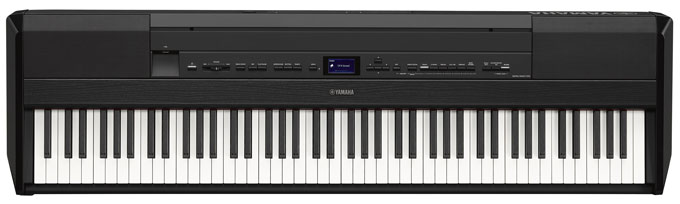
The Yamaha P-525 is a much-anticipated update to the previous flagship of the P series, the P-515. This new model comes equipped with a refreshed action and an upgraded sound engine that includes two distinct grand piano tones.
Essentially, the P-525 is a portable version of the Clavinova CLP-845, offering a similar key action, sound quality, and features — all at less than half the price of the CLP-845. That alone gives you a hint of the impressive value and performance you can expect from the P-525.
Now, let’s dive into what this keyboard offers and see how it stacks up against the competition.

Touch
The Yamaha P-525 features one of Yamaha’s top-level key actions, the GrandTouch-S.
This key action comes in two versions: one with plastic white keys and the other with wooden ones, and the P-525 is equipped with the latter. Both versions are shorter than the original GrandTouch action, hence the “S” in the name.
Initially introduced in the Clavinova home digital pianos (CLP-7xx series) and continued into the new CLP-8xx series, the GrandTouch-S action is a standout feature for a portable instrument like the P-525, especially given its relatively affordable price.

The white keys on the P-525 are made of solid wood and covered with synthetic ivory material, while the black keys are plastic with a simulated ebony feel. It’s the only instrument on this list that offers fully wooden keys, a feature typically reserved for high-end console digital pianos.
While wood may not drastically improve performance compared to plastic or hybrid (wood/plastic) keys, it does add an extra layer of realism.
While, the P-515’s action was definitely on the heavier side, the new action provides a more balanced touched with an improved key pivot length.

The GrandTouch-S action also simulates escapement (the subtle ‘notch’ you feel when pressing the keys gently), although this effect is quite subtle, similar to what you’d find on Roland’s PHA-50 action.
One notable characteristic of the P-525’s keys is that they almost don’t bounce back, a contrast to Kawai’s RHIII action, which has a more pronounced bounce. Ultimately, this comes down to personal preference, with some players appreciating the P-525’s approach and others favoring the feel of Kawai’s RHIII.
Sound
The Yamaha P-525 features some of the best piano samples Yamaha has to offer, taken from two of the world’s most renowned concert grand — the Yamaha CFX 9-foot concert grand and the Bösendorfer Imperial Grand.
I’ve always been drawn to the full, rounded tone of the Bösendorfer, especially its rich, roaring bass. The Yamaha CFX, known for its bold, resonant tone, is a favorite in many concert halls worldwide.
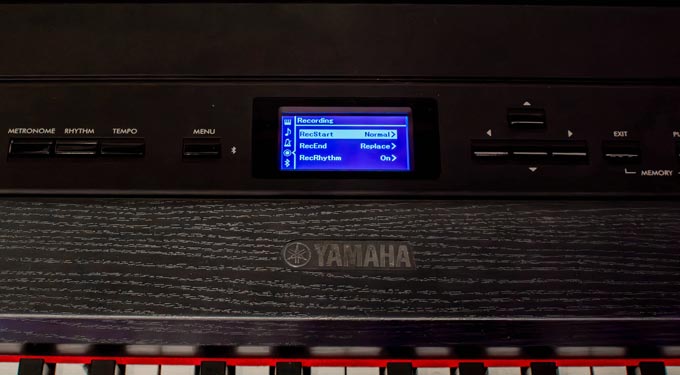
What’s cool about the P-525 is that the CFX tone comes with a binaural version. This means the sound was recorded with microphones positioned where your ears would naturally be, creating a more immersive listening experience when using headphones.
The P-525 also uses Yamaha’s Virtual Resonance Modeling (VRM) to capture the intricate details of a grand piano’s sound. While it doesn’t offer as many adjustable settings as the Roland or Kawai, you still get all the key elements — damper resonance, string resonance, body resonance, aliquot resonance, key-off simulation, and lid position.
Yamaha also added a feature called Grand Expression Modeling, borrowed from their Clavinova line. This simulates the subtle mechanical nuances of a real grand piano, making your playing feel more authentic.
All these details are brought to life through a powerful 4-speaker 52W sound system, which is quite impressive for a portable instrument like the P-525.
Features
While the Roland FP-90X is geared toward live performers, the Yamaha P-525 shines with its powerful arranger capabilities.
It offers 540 built-in tones, including 44 main tones, 18 drum/SFX kits, and 480 XG tones (Yamaha’s answer to Roland’s GM2). Not all of them are top-tier, but the main tones are convincing and especially enjoyable in split and layer modes.
One standout feature of the P-525 is its 16-track MIDI recorder, which is a rarity for digital pianos outside of workstations. This allows you to create complex multi-instrument arrangements that can be converted into audio files for live performances. The audio recorder captures sound in WAV format.
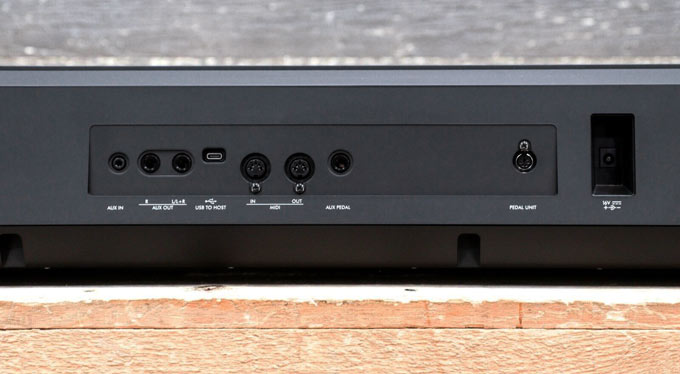
The P-525 also features a USB Audio Interface, which means its USB port handles both MIDI and audio data. This eliminates the need for a separate audio interface, allowing you to record the P-525’s sound directly into a DAW without unnecessary conversions.
Connectivity options are on par with the ES920 and FP-90X, and the P-525 includes Bluetooth MIDI and audio support. However, this feature varies by region, so check for a Bluetooth logo on the front panel to confirm if your unit supports it.
- Well-crafted GrandTouch-S keyboard with synthetic ebony/ivory
- Detailed sound of the Yamaha CFX and Bösendorfer concert grands
- CFX binaural samples improve the listening experience via headphones
- Lots of preset tones (540)
- Powerful onboard sound system
- 16-Track MIDI sequencer
- Built-in USB Audio Interface
- Boring design
- Bluetooth is not available in some regions
- Binaural samples are only for the CFX tone
4) Casio PX-S6000 – On the Forefront of Innovation
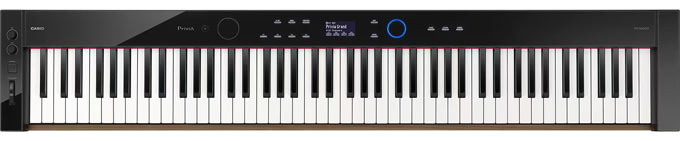
Casio has a reputation for producing reliable digital pianos, but their presence in the higher-end, portable digital piano market has been limited, often overshadowed by Roland, Kawai, and Yamaha.
With the PX-S6000, along with its siblings the PX-S5000 and PX-S7000, Casio is shaking things up.
Central to this evolution is Casio’s new Smart Hybrid Hammer Action, which replaces the more basic actions found in their older models, making the PX-S6000 a strong competitor in the advanced digital piano segment.
And it’s not just about the action. The PX-S series shows off Casio’s dedication to pushing boundaries, both in how these pianos look and how they perform.
Touch

The PX-S6000 boasts Casio’s new Smart Hybrid Hammer Action, which significantly enhances the tactile experience compared to Casio’s older actions like their Tri-Sensor Scaled Hammer Action.
This action combines wooden and plastic components, with the white keys being partially made of wood, which provides a more authentic feel akin to acoustic pianos.
This hybrid action is a marked improvement over the standard actions in Casio’s previous models, offering a firmer, more responsive touch. The keys are topped with synthetic ebony and ivory, which not only improve grip but also offer a smoother, more refined texture.

This action also features a simulated escapement, adding a subtle but important layer of realism, particularly when playing softer passages.
However, it’s worth noting that the compact design of the PX-S6000 means the key pivot length is shorter compared to other keyboards on this list. This might be a bit of a drawback for advanced players who often play further up the keys.
Sound
At the heart of the PX-S6000 is Casio’s AiR sound engine, which powers its impressive tonal range.
One of the standout features of this model is the inclusion of the German Hamburg Grand piano sample, a high-quality tone that replicates the rich, resonant sounds of one of the world’s most revered concert grand. This sample is particularly noted for its warmth and depth, with a bass response that’s both powerful and controlled.
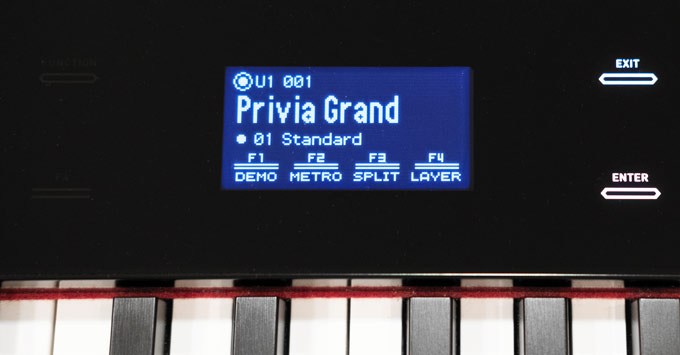
The PX-S6000 also recreates all the main piano sound nuances, including string resonance, damper resonance, damper noise, and key on/off action noise through its Acoustic Simulator, while also allowing you to adjust each individual element.
While the customization options might not be as detailed as those found in Roland or Kawai models, they’re more than sufficient for most players.
Along with superb pianos, the PX-S6000 offers a robust selection of 350 instrument tones, which include various electric pianos, organs, strings, and synths, making it versatile enough for multiple genres.
And let’s not forget the sound delivery — thanks to its 4-speaker 32W sound system, the PX-S6000 packs a punch, especially given its compact size.
Features

The Casio PX-S6000 is not just portable — it’s the lightest keyboard on this list, at 32 lbs, making it around 60% lighter than the Roland FP-90X. With a depth of just 9.5 inches, it’s also the slimmest, which adds to its appeal for players on the move.
The PX-S6000 features a sleek, touch panel interface, blending modern aesthetics with functionality.
Unique to this model, the PX-S6000 can even run on batteries, providing up to 4 hours of playing time with 8 AA batteries—a rare convenience for a high-end digital piano.
Connectivity options are plentiful, including Bluetooth MIDI and audio support (via the included WU-BT10 adaptor), allowing for wireless connections with devices.
Another standout feature is the microphone input with a dedicated volume knob, perfect for those who want a simple setup for vocals.
If you’re in the market for something even more premium, consider the PX-S7000. Though it does exceed the $2000 mark, it offers additional perks like an integrated stand, a 3-pedal unit, and a range of striking colors — including the eye-catching Mysterious Mustard.
This flagship model truly represents the pinnacle of Casio’s design and technology.
- Beautiful and unique design
- Lighter and more compact than the competition
- New Smart Hybrid Hammer action
- Solid piano and key-based sounds
- In-depth effects section
- Can operate on batteries
- Key pivot length is average at best
- Touch sensitive controls might not be for everyone
- Few hands-on controls for live performers (just two knobs and a pitch bend wheel)
Things You MUST KNOW Before Choosing Your Pro-Grade Digital Piano
I hope this article has helped you narrow down the right instrument for your needs.
Keep in mind, this list is based on what we believe are the best portable digital pianos for advanced players available today. But if you haven’t found the perfect fit just yet, don’t worry — I’ve got some additional insights that might guide you toward the digital piano you’ll love.
Below are some key terms and aspects of the digital piano world that you’re likely to encounter during your research. Understanding these will help you make an informed decision and ensure you choose the instrument that best suits your playing style and needs.
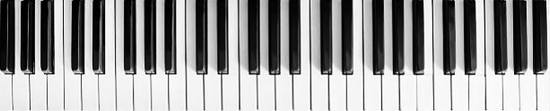
Modern acoustic pianos have 88 keys. Most keyboards and digital pianos have 88, 76, 73 or 61 keys.
73 keys are enough to play most (99%) modern pieces. Some advanced (classical) pieces require a full set of 88 keys.
There are 3 most common types of actions:
1) Non-weighted – most organs, synths and entry-level keyboards are not weighted.
2) Semi-weighted – common action for budget portable keyboards (usually cost <350$). Spring-loaded mechanism adds a bit more resistance to the keys compared to the non-weighted action.
3) Fully weighted (hammer action) is designed to replicate the action of a real piano. It uses small hammers (rather than springs) attached to each key to recreate the mechanical movements found inside a real piano.
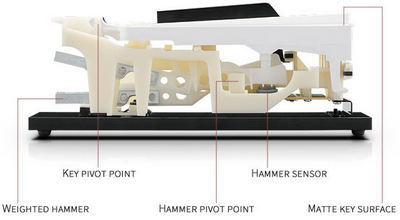
If your main goal is to play piano, you’ll definitely want a keyboard with hammer action keys.
This type of key action closely mimics the feel of real piano keys, helping you develop proper finger strength and technique.
It also makes the transition to an acoustic piano much easier if you decide to make that switch later on.
Touch sensitivity (also known as velocity sensitivity or touch response) is an important feature in any keyboard or digital piano. It ensures that the volume changes depending on how hard or soft you play the keys, which is one of the key characteristics of musical expression.
These days, it’s not a major concern. Almost any keyboard over $150 comes with touch-sensitive keys, regardless of the action type. Moreover, you’re typically able to adjust touch sensitivity to suit your playing style better.
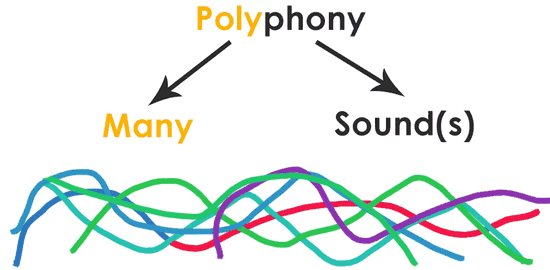
Polyphony is the number of notes a digital piano can produce at the same time.
These days, most digital pianos are equipped with 64, 128, 192 or 256-note polyphony.
You may wonder how it is possible to have 32, 64, or even 128 notes playing at the same time, if there are only 88 keys and we never play them all together.
First of all, many of today’s digital pianos use stereo samples, which sometimes require two notes for each key played.
Furthermore, using the sustain pedal, sound effects (Reverb, Chorus), dual-mode (layering), and even the metronome ticking sound takes up additional notes of polyphony.
For example, when you depress the sustain pedal, the earliest played notes continue to sound while you’re adding new ones and the piano needs more memory to keep all the notes sounding.
Another example of polyphony consumption is when you’re playing along with a song playback (can also be your own recorded performance) or auto-accompaniment.
In this case, the piano will need polyphony not only for the notes you’re playing but also for the backing track.
You’ll rarely need all 192 or 256 voices of polyphony at once, but there are cases when you can reach 64 or even 128 note limits, especially if you like to layer several sounds and create multi-track recordings.
For an intermediate player it’s desirable to have 128 notes of polyphony or more.
Along with the standard “Single” keyboard mode, digital pianos often offer additional modes that allow you to use two instrument sounds at the same time or playing four hands.
Here are the most popular modes that digital pianos have:
1) Split Mode – divides the keyboard into two parts, allowing you to play a different instrument sound in each of them. For example, you can play guitar with your left hand and piano with your right hand at the same time.
 2) Dual Mode (Layering) – allows you to layer two different sounds so that they sound simultaneously whenever you press a key. For example, you can layer strings with the piano sound or combine whatever sounds you like to get some new interesting combinations.
3) Duo Mode (a.k.a. Duet Play, Partner Mode, Twin Piano) – divides the keyboard into two halves with identical pitch ranges (two middle Cs) allowing two people to play the same notes at the same time.
Duet Play is particularly useful when you use it with your teacher or tutor who will play you some tunes on one side of the keyboard, and you’ll be able to follow along on the other side, playing the exact same notes at the same time.

Some digital pianos allows you to turn off the left- or right-hand part (track) of a song (preset or downloaded from the Internet) and practice it, playing along to the playback of the other part.
Pianos that have this function usually have a multi-track MIDI recorder as well.
A MIDI recorder allows you to record and play back your own performances without using any additional equipment.
Multi-track recording (2 and more tracks) allows you to record several musical parts onto separate tracks and play them back as a single song. You can also experiment with your recording by turning off some of the recorded tracks.
For example, you can record the right-hand part of the song on track 1, and the left-hand part on track two (while listening to the playback of the first track).
You can also create complex, multi-instrument recordings by recording several instrument parts onto separate tracks and playing them back together afterwards.
MIDI-recording is not the recording of the actual sound of the instrument. Here, we’re recording the MIDI data (a sequence of notes, their length, velocity and other parameters).
A built-in audio recorder will allow you to record the actual sound of the instrument (native samples) and save it to a flash drive usually in WAV format (Linear PCM, 16bit, 44.1 kHz, Stereo).
You can then share your recording on social media, upload it to SoundCloud, burn to CD, etc.
Audio recordings are more universal than MIDI ones because they provide you with a CD-quality audio file playable on most modern devices, and don’t require any additional software or sample libraries (VSTs) to render a MIDI recording to audio.
Accompaniment function will enrich your performance, providing full backing accompaniment (rhythm, bass, harmony) that will follow your playing and make you sound like a full band.
The accompaniment changes depending on what notes you play with your left hand (chords or even single notes if you don’t know full chords).
In other words, you manage your “band” with your left hand (by specifying chords) and play the main melody with your right hand.
Some instruments offer several accompaniment modes, and allow you to specify chords using the full range of the keyboard.

1) Transpose function allows you to shift the overall pitch of the keyboard in semitone steps. The function is particularly useful when you want to play a song in a different key but don’t want to change your fingering and learn it in a new key.
So, for example, if you know how to play a song in F major, you can transpose the pitch and play it in C major without actually learning it in the new key.
You can also transpose a song written in a difficult key (e.g., many black keys) into a different key with easier chords, but still hear it as if you were playing in the original key.
2) Tuning function allows you to shift the pitch from the standard A440 tuning in 0.1Hz or 0.2Hz steps.
You can use this function to match the piano’s pitch finely to that of another instrument or music (old piano, recording).
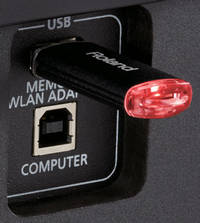
This port is also known as USB to Device port or USB drive port. The port can be used for connecting a flash drive to the piano to exchange files quickly and easily.
For example, you can load MIDI songs into the piano’s internal memory for playback or rehearsal (if the piano offers this option).
Alternatively, you can play back WAV and MIDI files (depending on the piano model) directly from the flash drive without loading them into the piano’s internal memory.
And finally, you can save your own recorded performances with the instrument to the flash drive and load them back onto the instrument when needed.
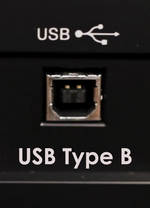
This port is often referred to as USB to Host terminal or USB to Computer port. This port is used to connect your digital piano to a computer or a smart device (using a special adapter) to exchange songs/files, and MIDI data.
This port will allow you to use the piano as a MIDI controller to control various music apps such as GarageBand, FlowKey, Playground Sessions etc.
There are actually tons of other apps that can expand the functionality of your digital piano in terms of learning, composing, recording, and editing music.
Some brands offer their own free apps designed for certain piano models. Such apps usually enable you to control all the settings and functions of the instrument using an intuitive graphical interface.
Have thoughts or questions?
Join the discussion in the forum →
You might also like:
If after reading this review you still have doubts about what instrument to choose, take a look at our Digital Piano Buying Guide and other popular articles listed below:
Best Digital Pianos for Intermediate Players
Best Mid-Range Home Digital Pianos (Under $2,000)

Best Premium Home Digital Pianos Under $3500

The Ultimate Guide to Buying a Digital Piano
Is there a chance that you will test a Dynatone digital piano? They also have wooden keyboards in some pianos.
What do you think of the Yamaha cp88 vs the p515 ?